
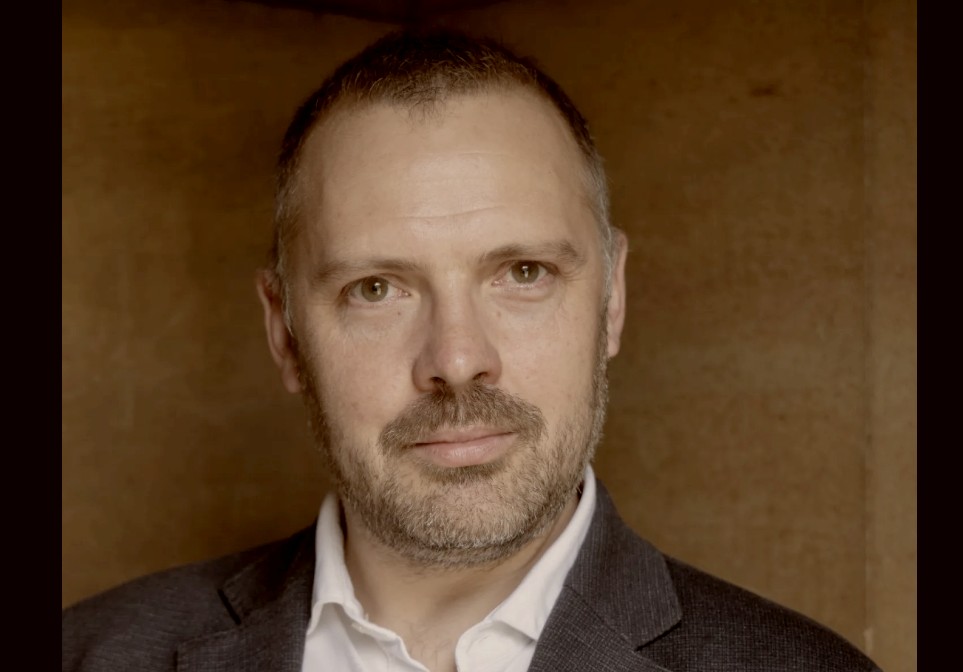
“Why Politics Fails.” That was the central question posed in his international bestseller published in 2023 by Ben Ansell, Professor of Comparative Democratic Institutions at the University of Oxford. Two years later, with Western societies witnessing Donald Trump’s return, as well as the rising poll numbers of Marine Le Pen and Nigel Farage, Oikonomiki Epitheorisi spoke with the British academic in its final issue of the year about the entrenchment of populism in modern societies, the future of democracy, and what he describes as “the end of the era that began in 1989.”
Interview by Thanasis Katsikidis
(Published in Economic Review - December 2025)
Has the far right become mainstream?
In a previous conversation, you highlighted the rise of the far right and Euroscepticism. Today, we see both deeply rooted in our societies. Why have modern political systems failed to isolate their most extreme voices?
To be honest, I think the reason is that many citizens want to vote for these parties. Initially, when we were talking about 5% or 10% of citizens wanting to vote for far-right parties, it was easy for mainstream parties to exclude them from any coalition, because across Europe there was a very strong cordon sanitaire.
However, something happened when these parties surpassed 15% of the vote and edged slightly above 20%. At that point, the cordon sanitaire ceased to be sustainable in the same way. I think this happened because a significant number of voters decided they wanted to hear what these parties had to say.
We often blame the centre-right and say: “You shouldn’t do this, and it is your responsibility to defend the political system from people further to your right.” But by the same logic, we can also blame voters, because they are the ones choosing to support these parties.
We will come to voter responsibility in a moment. If we accept that Western societies have, to some degree, failed to eliminate inequality and social injustice, is there a way for them to restore their legitimacy and credibility?
I think the major challenge is not inequality, because inequality increased dramatically in most countries from the mid-1970s to the late 1990s. And the late 1990s are precisely the period that people remember nostalgically as a time with less populism. So I am not sure it is inequality as much as it is growth.
In my view, it is the absence of economic growth in most countries from the Great Recession of 2008 to the present day. If you think about recessions over the last 100 years, apart perhaps from the 1930s, they are usually V-shaped, where growth returns, or U-shaped, where there is a low point that lasts for a while before things recover. But the 2008 recession was L-shaped: we never really bounced back. And I think that, after years of hard work, this generated frustration.
Today, politicians have lost their ability to convince people that their lives will improve. Having said that, judging by the United States, where growth was genuinely strong from 2010 onwards, it did not seem to help Joe Biden. Therefore, I do not think we can assume that economic growth alone will end populism. What I do believe is that its absence makes it much harder for mainstream parties to confront it.
Do citizens bear responsibility?
Adding citizens—that is, voters—to our discussion, do they bear responsibility for the system’s failures?
To some extent, yes. If you are going to vote for extremist parties, you must take responsibility as an adult for whom you vote for. I think that sometimes mainstream parties, and certainly the media, behave as if people who vote for far-right parties have no agency, are not real people, and cannot be blamed. But no—they are adults, and they are responsible for how they vote.
On the other hand, more generally, if we are talking about all voters, I think they have fallen into the trap of being unwilling to make difficult fiscal choices. We have ageing societies throughout Europe. Voters are adamantly opposed to raising the retirement age, they want pensions to remain equally generous, and they do not want to pay higher taxes. Yes—but you cannot have all those things at the same time.
That said, I cannot blame voters for wanting to keep all the benefits they enjoy, even if that is impossible, because it is the politicians’ job to tell them they cannot have everything and that they must make a choice. They can choose either high taxes and high spending, or lower taxes and lower spending, but they cannot choose lower taxes and higher spending. And I think politicians have stopped trying to make that argument.
This is quite different from, say, the 1970s and 1980s. You may have disagreed with Margaret Thatcher, but it was very clear what she stood for. She did not pretend to be something she was not. Likewise, if you supported the left-wing parties of the time, you knew you would pay more taxes.
The traps of democracy
Delving deeper into the risks, in your book Why Politics Fails (published in Greek by Metaichmio), you describe several democratic traps. Given that individualism in liberal democracies often overshadows the collective good, do you believe that the rupture between citizens and the social system could undermine our democratic structures and institutions?
I think there is an unavoidable problem in all democracies. It is good that we give people freedoms and the individual right to vote, and correspondingly that they face the consequences of that right.
However, the danger now is that someone may come along and say: “Well, all these bad things happening are consequences of democracy. And if you listen to me, the strong leader, I can eliminate all these disagreements and conflicts between people, and we will decide everything together.” You can see why that is appealing.
It was appealing in the 1930s, and it can be appealing today, because people probably value their rights regarding free speech and voting, but most people also want an easy and peaceful life and, of course, enough money. And if a dictator or a strongman can promise them that, I think that is genuinely dangerous for our societies.
Are you optimistic or pessimistic about the future of democracy?
In March I said I felt we had reached peak populism, because it seemed to me that the elections in Canada and Australia were a reaction against Donald Trump. And what I felt at the time was that Donald Trump’s popularity would only move downward, which I thought I was right about. Now, I am not sure we have reached peak populism yet, for example in the United Kingdom.
That said, it is entirely possible that next year Jordan Bardella—or Marine Le Pen, if she escapes electoral exclusion—could become the next President of France. And I think Italy’s experience has shown that you can have a politician like Giorgia Meloni, who campaigns as a populist but governs as a conservative politician from a mainstream party. Of course, I realise she has implemented some populist policies, but generally speaking she was primarily a populist during her election campaign.
This experience offers a model for populists: it makes sense to be a populist during a campaign, but governing as a populist turns out to be a failed project. And that makes me optimistic that democracy is more resilient than we think.
Farage, Meloni, Trump
As we look at the world and the events unfolding before us, do you expect populism to strengthen or weaken the resilience of democratic institutions, given the rise of politicians such as Farage?
Farage is a very clever politician in many respects. He possesses one of the abilities that Giorgia Meloni has, namely knowing when to be a populist and when not to be.
Looking at the United States, I believe that one possible scenario for the future is that Donald Trump, who is clearly anti-democratic in every sense and certainly anti-liberal, will end up being the only president confronted with a series of political and legal battles. If he wins them, that would be deeply worrying for all of us. However, I believe that at this moment he is beginning to fail and the system is pushing back. It would not surprise me if he were to lose the 2026 elections by a large margin and spend the following two years hounded by the Democrats.
Likewise, it would not seem impossible to me that Nigel Farage may never truly take off with Reform UK. So there is a future scenario in which everything turns out fine, but there is also a future scenario in which Donald Trump is able to influence next year’s elections and court-martial a U.S. senator, as he claims he could. And I think that, in such a case, people should be worried. I am simply optimistic that it will not happen.
Does Trump represent a modern version of Hobbes’ Leviathan?
In an article, I compared Donald Trump to a collapsing Leviathan—a patchwork of authoritarianism and control that may appear attractive to people, as Hobbes described, and which I call “chaotic authoritarianism.” The problem, however, is that in Hobbes’ Leviathan you enter into a social contract with a tyrant who will protect you and ensure that bad things do not happen to you. Donald Trump’s promises are not nearly as reliable.
Therefore, I am not convinced that, by signing a contract to protect me, Trump would actually make me feel safe when he could just as easily turn against me. By contrast, I think Erdoğan has been very effective in Turkey, and even Vladimir Putin enjoyed some success in that regard ten or fifteen years ago.
Populism and ideology
Speaking of populism, what are the main differences or similarities between the populists of today and those of the last century?
I think that populists at the beginning of the twentieth century had an ideology, something that I do not think is true today. This is evident in Vladimir Putin, who is searching for some kind of ideology, while philosophers such as Alexander Dugin construct grand narratives of Russian history to explain, after the fact, what he is doing.
If we look further back, National Socialism was an ideology, as was Communism. The same was true of Mussolini’s Fascism, which drew inspiration from Giovanni Gentile. Moreover, in the 1930s democracy itself was still very new, and it was not entirely clear that liberals always liked it.
As a result, liberals were confronting these ideologies for the first time and had not yet defeated either Communism or Fascism. It was therefore easy to believe that democracy was an outdated system belonging to the past and that the future belonged to something like Fascism. To a large extent, that reflects what debates in the 1920s and 1930s looked like.
I think we sometimes see echoes of this today in the way certain anxious liberals talk about post-liberalism and Trump as forms of anti-liberalism. But what is happening today is not ideology—it is reaction. And I suspect that, because these movements are merely reactions, they are not as powerful as Italian or German Fascism once was.
Two years have passed since the publication of your book Why Politics Fails. How is your research evolving? Are there new areas you are exploring?
The unfortunate thing is that I cannot write a book called Why Politics Succeeded, because that has not happened. Instead, I am writing a new book entitled A Natural History of Democracy.
It is a journey back through time, from before ancient Athens to the present day, and I am trying to examine the struggle between those who can be considered the ancestors of populism—whether it is Maximilien Robespierre, Andrew Jackson, or anyone who seeks to wield influence over the people—and those who are heirs to Jean-Jacques Rousseau, as opposed to those who follow the tradition of James Madison and view democracy as the contest between opposing interests and the balance of powers among them.
So it is a broad history of this endless debate—one in which we are certainly still engaged today, but which has been going on for 2,500 years.
Are we witnessing the end of an era?
To conclude, and moving beyond the narrow boundaries of politics, if we were writing a history book today, would the events unfolding in Ukraine, the Middle East and the lack of cohesion within Europe mark the beginning or the end of an era?
I think we would probably regard them as the end of the era that began in 1989 with the fall of the Berlin Wall. What we are seeing is a return to a multipolar world and to a world in which America has lost confidence in the ideologies of economic liberalism and democracy.
It is a world in which the ever-expanding jurisdiction and size of the European Union are contracting. It is also a world in which interstate wars have returned with a vengeance. The question is whether this may also mark the beginning of a new era. I suspect that the events of this new era will be highly unpredictable, because we genuinely do not know what impact artificial intelligence will have on the labour market or on the information environment in which we live.
Nor do we have a clear understanding of whether global warming will simply lead to more floods and higher costs, or whether it will have truly catastrophic consequences. So I think a great deal of uncertainty lies ahead of us.
Finally, we do not know what will happen after the inevitable deaths of Vladimir Putin, Xi Jinping and Donald Trump, because they have been the three totemic figures of the past decade and could be succeeded in very different ways. For example, China could one day be led by someone resembling Hu Jintao. In Russia, however, it is difficult to imagine a liberalisation of the country, while in the United States one could certainly imagine the return of a more conventional American president.
(Photo credits: Oxford University)