
A society’s ability to manage knowledge depends on the medium through which that knowledge is produced and circulated. Written text functions as a space where arguments are organized, examined, and revised. In today’s reality, video, short-form messages, feeds, and the algorithmic reward of instant attention are shifting the center of gravity away from evidence and toward the narrator.
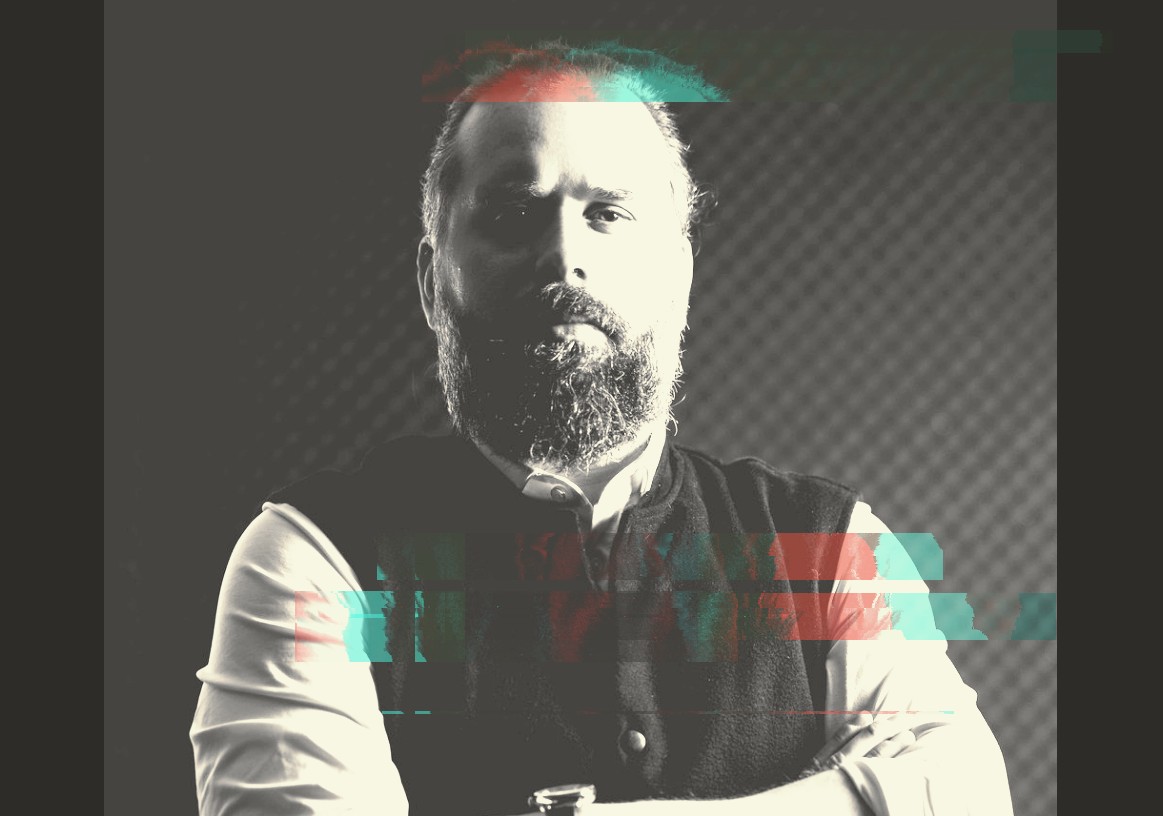
Sven Gerst, a German thinker working at the intersection of philosophy and political science whose work focuses on democracy, the knowledge society, and liberalism, sees this change as a rupture in the way knowledge is produced, as information now flows primarily through oral and audiovisual channels. Reading, which requires concentration and reflection, is giving way to a regime of constant stimulation. In his view, this weakening not only threatens public debate but also undermines the foundations of democracy itself.
Interview by Loukas Velidakis
(Published in Economic Review - December 2025)
The Decline of Reading and Its Consequences
I recently read in your newsletter about the decline of reading and how it affects both the economy and democracy. You argue that this decline is not merely a cultural shift but also an economic problem. How does a reduced capacity for reading translate into lower productivity or weaker economic performance?
First of all, before we get into the “hard” economics, I would say that we need to look at the broader culture and what reading has done for culture. We need to distinguish between a literate society and what we are now seeing as a post-literate society. In a literate society, arguments were formulated and transmitted through writing, which meant that we could always return to the written text, identify a clear and structured line of reasoning, and revisit it repeatedly. That made economic prosperity possible, it made culture possible, it made philosophy possible, because we were able to build upon the ideas of others.
Now, in a post-literate society, we no longer do that. We are returning to an oral society—or at least that is the concern, that we are returning to an oral society. And in an oral society, we cannot refer back to arguments in the same way because we have to rely on the storyteller. There is no stable ground, so to speak. As a result, we see less growth in impersonal knowledge and more personalized knowledge that depends on particular narrators, personalities, and so on. These shifts permeate society as a whole.
How is this reflected in the economy and society?
The economy is only one part of the story, and actually a later part of it. More broadly, I am concerned that reading ability is declining—and we can examine why that is happening. We see it especially among teenagers: literacy rates are falling, reading readiness is falling, and so on. That is the broader context: we are coming from a literate society that enabled cultural, economic, and social progress, and now we are possibly seeing the first signs that we are moving toward a post-literate, almost oral society.
And how does that reduce productivity or lead to weaker economic performance?
In oral societies, we operate more instinctively. What made economic progress possible was that we did not simply follow our instincts and emotions. Culture means cultivating ourselves. It means being able to plan for the future. In an environment that is more oral or more instinct-driven, we focus on short-term pleasures and fail to plan ahead. This has to do with the formation of social habits. If you operate instinctively and live only in the present, you do not plan for the future. You do not invest in the future. You consume now. Instead of thinking long-term about your career path, you choose immediate gratification.
The problem with this type of society is that knowledge is not institutionalized, and that leads to lower human capital, reduced worker productivity, and less innovation. Inevitably, this will negatively affect economic growth. In fact, if we remove the growth generated by artificial intelligence and the enormous investments flowing into that sector, we rarely see substantial growth in other industries. For now, the major gains coming from AI are masking many of these factors. But once AI development begins to slow, we will see what is really underneath the surface.
I also think we have created a culture of short-term pleasure instead of long-term thinking. This affects how much people save and invest. Younger generations are more skeptical about saving and investing. And of course, you choose the short-term dopamine hit instead of investing in your education and therefore in your productivity. That is the deeper social critique.
Social Media, Digital Crack, and Misinformation
But there is also the more superficial version of the argument.
The more superficial version is that we live in an environment that constantly presses the dopamine button. TikTok is one of the most addictive platforms—it is like digital crack. And that has consequences. People spend less time educating themselves because they can get digital crack for free online.
And that leads to brain rot…
Of course, and it leads to cognitive deterioration. If you are constantly connected to these platforms, your attention span is affected. Your relationship with text is affected. Your dopamine receptors are affected. Just as overexposure to pornography changes the way you experience normal sexual intimacy, excessive exposure to digital stimulation changes the way we relate to text. Reading has fundamentally changed. In the age of social media, it is not that we read less; it is that we read differently. We consume far more short-form text. But that is not a book. It is not a structured argument. It is a new stimulus almost every second. That is not reading. It causes people to unlearn long-form reasoning.
Let us turn to misinformation, polarization, and simplistic narratives. We are bombarded with notifications all day long. To what extent do you think this is connected to the erosion of deep reading and the rise of superficial information consumption?
I think misinformation is sometimes presented in an exaggerated way because misinformation has always been part of human societies, hasn’t it? Information is abundant. And most of the time we choose information that aligns with our values. There is a nice saying: “There are infinite stars in the sky; what matters is how you connect them.”
For example, someone who is highly skeptical of immigration will be more inclined to believe information that presents immigration in a negative light. People have always had this psychological trait of selecting information that fits their value system. However, we are now entering an era in which people are unlearning critical thinking to some degree. And that is because, as I mentioned earlier, information is no longer primarily consumed through reading and balanced sources, but through short-form videos and podcasts.
This means we receive information in a more emotional way. Short-form video is so powerful because it is not just written language—which is relatively neutral—but comes with sound and imagery. It appeals directly to people’s instinctive nature. As a result, we are in a more emotional state when receiving information. False or misleading information becomes loaded with emotional content. Written language cannot do that in the same way. This is one of the reasons misinformation is so difficult to combat. That is why misinformation and manipulation so often rely on dramatic images, videos, sound, and anything else that amplifies emotional impact.
From the Text to the Narrator and the Charismatic Leader
And now the narrator plays a decisive role.
In a book, you have the text. In a podcast, the person delivering the information becomes a crucial factor. We are almost entering a world of subjectivity, where what matters most is not the information itself but where it comes from. Someone can spread misinformation as long as they are regarded as “credible.”
Think of Donald Trump. He can get away with almost anything because he is the person some people turn to. It is not necessarily that they truly trust him; it is that he is the narrator of the age for them. People receive the information, and the information comes second. What matters is that he is the one telling the story. That is the worrying part: that epistemic authority, philosophically speaking, no longer comes from the information itself but from the individual conveying it.
As we know, reading trains attention, patience, and critical distance. What happens to democratic citizens when these cognitive habits weaken?
I think this is the most important issue. In the economic sphere, society can somehow muddle through, and we do not yet have clear data showing exactly how overall productivity is affected. But politics is far more vulnerable. What is really being eroded is the informed, enlightened citizen.
That, I think, was the ideal of liberalism after the Enlightenment: the triumph of reason over dogma and instinct. That was the promise of the Enlightenment project. And after the Enlightenment, we relied heavily on book culture.
Book culture gives you precisely what you mentioned: patience, critical analysis, and the ability to revisit an argument. In a post-literate society, these qualities disappear. People lose the analytical skills needed to distinguish true information from false information. Instead, they turn to the credibility of the charismatic leader. This brings us back to the narrator. Everything that was required to build liberal democracy—which was a post-Enlightenment construction—is being undermined by the trends we see in what I call post-literacy. We are eroding precisely those skills you referred to.
Artificial Intelligence and Verbose Text
Let us move to the world of artificial intelligence. We are living through a major revolution. AI tools now allow us to “outsource” thinking. Do you believe this accelerates the decline of reading, or could it, under certain conditions, revive it?
That is a good question. I do not think we yet have enough data to make a clear judgment about where this will lead. We have good data on reading trends going back to 2002–2003, but ChatGPT was only released at the end of 2022. So we still do not have a complete picture of whether the fears people express will actually materialize.
My intuition, however, is that we will see much more mass-produced, low-quality AI content—what I would call AI slop. Very generic content that looks like written argumentation but is not really argumentation. The reason is that large language models can generate enormous amounts of verbose text, but they cannot provide the essence of genuine new understanding or some new truth. So we are going to see a lot more AI slop.
I think we are already seeing that happen…
Yes, I think we already are. Many articles online are simply huge quantities of content. I believe a large part of the internet is already filled with AI slop, and that is concerning.
On the other hand, I also have a more balanced perspective. There will be many winners from AI—people who use it to enhance themselves. So perhaps your more optimistic interpretation is correct. But I also think there will be many losers. And perhaps society as a whole will be the biggest loser.
There will be people who genuinely amplify their cognitive abilities through AI—who become enormous multipliers within this ecosystem. They will be the major winners. But my feeling is that society overall will be the loser because of the effects I mentioned earlier—on democracy, political structures, culture, and so on. So while some individuals will benefit, society as a whole, I believe, loses.
A Return to the Pre-Enlightenment Era?
What are the political risks of a society that consumes information without the slow, deep processing that reading provides?
If the hypothesis that we are moving toward post-literacy is correct, then we are moving almost toward pre-literacy—toward a world before the Enlightenment. And that means a return to oral culture.
This has many consequences. For example, if we are moving from a literate culture—the culture of the book—toward a pre-literate period, then first and foremost we will witness the end of objectivity. People will come to believe that all truth is subjective. The book gave us a sense of objectivity because it was written down; you could revisit it and debate its arguments.
I believe we will also see a rise in mysticism. With the decline of objectivity comes the rise of subjectivity and therefore greater belief in supernatural ideas. We already see this among younger generations: they love astrology. We are not seeing a return to traditional Christianity. Generation Z is deeply interested in astrology and various forms of supernatural mysticism.
One final question, and perhaps an unavoidable one. What kinds of institutional or educational reforms could realistically rebuild a culture of reading?
The easy answer would be, of course, to ban TikTok. But TikTok is only one platform. The real problem is the dominance of short-form, algorithmically selected content.
The TikTok-ification of politics means fewer arguments and more entertainment. One only has to look at politicians on TikTok. The same applies to Facebook and Instagram. Facebook used to be a text-based platform. Now everything is audiovisual. These media operate through instinct rather than reading.
In case anyone has forgotten, TikTok is the defining platform of our age. TikTok has already transformed the entire media landscape because all platforms are becoming increasingly TikTok-like. Even LinkedIn now has video. This process is inevitable because it is connected to our instinctive human nature.
Banning this kind of content will not get us anywhere. It is neither realistic nor the way an open society should deal with such transformative changes. Instead, we need to think much more seriously about how to promote the virtues of a literate society…